
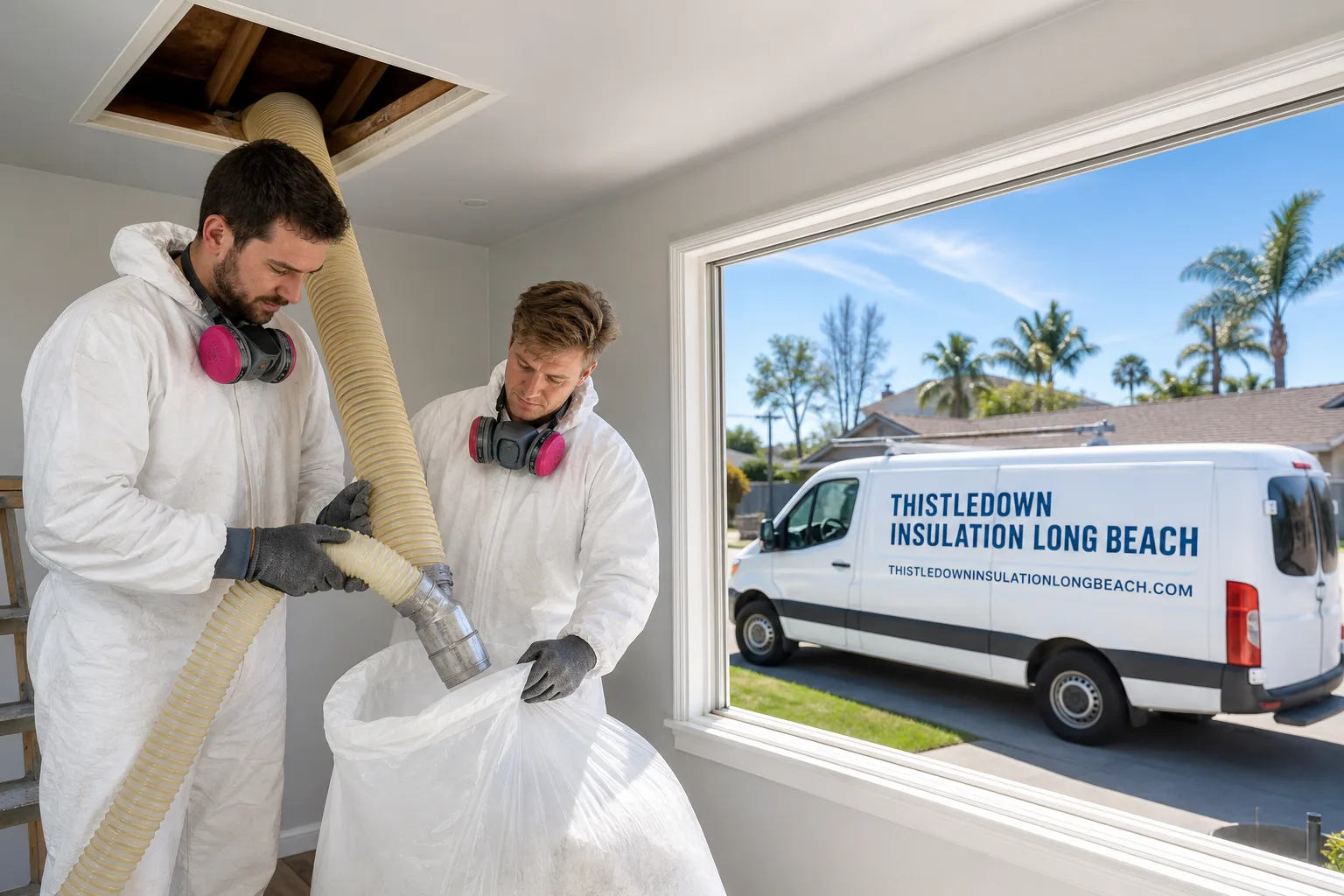
Fast, Reliable Attic Insulation Across Seal Beach
Attic insulation in Seal Beach usually costs between $1,400 and $3,800 for a standard 1,200-square-foot attic, with blown-in fiberglass running $1,400 – $2,800 and batt insulation between $2,100 and $3,800. Most Seal Beach homes we see date from the 1950s and 1960s, which means compacted or missing insulation is the norm, not the exception. We’re in Seal Beach neighborhoods every week, from the beach cottages in Old Town to the tract homes east of the 405, and we know what salt air does to insulation over time. Call (562) 471-3972 and a live person answers, 24/7. We’ll give you a written price before anyone picks up a tool.
Why Thistledown Insulation Long Beach Is Seal Beach’s Preferred Attic Insulation Company
Thistledown Insulation Long Beach is an independently owned Cedarwell-family company, founded in 2003, and we work to the same Cedarwell Care Promise on every job in Seal Beach. That means shoe covers from the front door to the attic hatch, drop cloths across your hallway, and a photo of the cleanup before our van pulls away. The name is a promise, too: thistledown is the soft fluff of the thistle, one of nature’s lightest insulators. The name tells you how carefully we work.
Every technician who walks into a Seal Beach home is background-checked and uniformed, so you know exactly who is upstairs while your kids are napping. We carry product from Owens Corning, GreenFiber, and Demilec, and where a pet-safe option exists, we offer it. Families in Seal Beach call us because the crew explains the price before the work, names the product going near the baby’s room, and leaves the floor as clean as it was when we arrived.
Neil Barron leads our crews, and he holds every job to the 365-Day Done Right Promise: if it is not done right, we make it right. No debate, no fine print. Seal Beach homeowners get a written price before any work starts, every single time. That is not an option or an upgrade. It is how we operate.
Attic Ventilation in Seal Beach
Attic Ventilation in Seal Beach matters for a different reason than it does in, say, Anaheim. The marine layer rolls in most mornings, and the moisture it carries settles into attics that do not breathe. That moisture condenses on roof decking, and over time it invites mold and rot, especially in the 1920s and 1930s beach cottages in Old Town where attic spaces were never vented to modern standards. Good ventilation moves that damp air out before it causes problems.
We install baffles, ridge vents, and soffit vents sized for Seal Beach’s coastal conditions, not for a generic Southern California template. Every job starts with air-sealing the attic floor, because a vented attic only works if warm, damp interior air cannot leak up into it. This is where the homes east of the 405 often need the most attention: decades of sea-breeze-driven dust have settled into the insulation and blocked the airflow entirely.
Marine Layer Moisture Control
Seal Beach’s morning marine layer is consistent, and it is the quiet enemy of attic spaces. When attic air cannot circulate, the moisture from that daily fog lingers, and the underside of the roof sheathing takes a slow hit. Our crews add baffles between each rafter bay before insulation goes in, so air moves from the soffit vents up to the ridge. Without that channel, insulation blocks what little ventilation the house has.
Ventilation for Vintage Cottages
Homes in Old Town often have low-slope or almost flat roofs, which leaves very little attic space to work with. We have ventilated attic spaces in Seal Beach beach cottages where the entire attic was smaller than a walk-in closet, using low-profile soffit vents and careful baffle placement. The goal is the same: move air, not tear out original framing.
Radiant Barrier in Seal Beach
Radiant Barrier in Seal Beach is a product we recommend selectively, because our coastal climate is not Mesa, Arizona. A radiant barrier reflects radiant heat, and in a mild marine climate, the payoff is smaller than it is inland. However, there are Seal Beach homes where it makes sense: west-facing attics in College Park East that catch full afternoon sun, or homes east of the 405 where the marine layer burns off by noon and summer heat builds under the roof. In those attics, a radiant barrier can take the edge off the top floor’s temperature.
We install radiant barrier as a supplement to insulation, never as a replacement. A radiant barrier does not provide R-value by itself; it only reduces heat gain through radiation. In Seal Beach’s climate, the primary job is still air-sealing and insulation. The barrier helps in specific sun-exposed attics, and we will tell you plainly when it does not, because writing you an honest price means telling you what you do not need, too.
Where It Pays Off in Seal Beach
If your attic has insulated ducts running through it, a radiant barrier can measurably reduce how hard your air conditioner works on warm afternoons. Homes near the coast often shut off their AC, but east of the 405, summers get warmer. A radiant barrier reflects the sun’s heat back out before it soaks into your insulation.
Humidity and Radiant Barrier Materials
We choose radiant barrier materials rated for humid coastal air. The wrong material can trap moisture against the roof deck, which is exactly what a Seal Beach attic does not need. We select perforated, breathable barrier products in this climate, and we inspect the attic’s ventilation before recommending the barrier at all.
Trusted Brands We Service in Seal Beach
We install and service insulation from Owens Corning, GreenFiber, and Demilec. That breadth matters in Seal Beach because an Old Town cottage and a College Park East tract home have very different attics, and no single product is right for both. We keep the materials on hand that suit Seal Beach’s coastal conditions, including blown-in fiberglass that resists the settling that sea-breeze dust accelerates. When you call, we will name the specific product we recommend and tell you why, before you spend a dollar.
Common Attic Insulation Problems We See in Seal Beach Homes
- Dust-compacted insulation east of the 405. Decades of sea-breeze-driven dust settles into fiberglass batts and reduces them from R-30 to R-11 or worse. We see this in almost every original attic in College Park East and The Hill.
- Salt-air corrosion west of Pacific Coast Highway. Crawl space insulation facing the ocean eventually falls away from the floor joists, leaving cold floors and open gaps. Homeowners west of PCH often need vapor barrier replacement every few years.
- Moisture damage in Old Town beach cottages. The 1920s and 1930s homes have attic spaces that were never vented, so the marine layer condenses on the roof decking. Left alone, that leads to mold and rot.
- Under-insulated attics in 1950s and 1960s tract homes. Post-war construction in Seal Beach often used minimal batt insulation, and much of it has slid or deteriorated. The result is drafty upstairs rooms and higher cooling bills in the summer.
Pricing for Attic Insulation in Seal Beach, CA
A typical blown-in attic insulation project in Seal Beach runs $1,400 to $2,800, depending on attic square footage and how much removal is needed first. Batt insulation for a standard Seal Beach attic ranges from $2,100 to $3,800. If your existing insulation is compacted and needs removal, expect that line item to add $500 to $1,000. Radiant barrier in Seal Beach typically adds $900 to $2,200, and attic ventilation upgrades run $400 to $1,500. We give every Seal Beach homeowner a written price before any work begins, so the number on the quote is the number on the invoice. Call (562) 471-3972 for a free estimate.
We Also Serve Cities Near Seal Beach
Thistledown Insulation Long Beach serves Seal Beach and the surrounding communities, including Los Alamitos, Cypress, Huntington Beach, and Midway City. If you are looking for Attic Insulation help in Seal Beach or a neighboring city, call (562) 471-3972 and a live person will answer. We coordinate scheduling from our Los Angeles office, and our crews work locally in Seal Beach every week.
Serving Seal Beach, CA - Our Local Coverage Area
We’re based in the Seal Beach area and know this community well. Use the map below to see our service coverage - if you’re nearby, we can almost certainly help.
FAQs About Attic Insulation in Seal Beach
Homes west of Pacific Coast Highway often need vapor barrier replacement every 3 to 5 years, because salt air corrodes the material and it tears away from the joists. Homes east of the 405 can usually go 8 to 10 years. We check the barrier during every crawl space visit and tell you plainly if it is time to replace yours. Call (562) 471-3972 if you are noticing cold floors or musty smells near your vents.
Yes. Blown-in fiberglass and batt insulation both dampen sound transmission, and in Seal Beach’s coastal environment, that is often the most immediate change homeowners notice. When we air-seal the attic floor and install insulation, road noise from Pacific Coast Highway and the occasional rumbling from the Naval Weapons Station become noticeably quieter. Dense-packed fiberglass from Owens Corning or GreenFiber is especially effective at absorbing sound.
R-38 is the standard recommendation for attics in Seal Beach, matching the Department of Energy’s guidance for coastal Southern California. Older homes often have R-11 or R-19, which is well below what a modern attic needs. We recently serviced a 1950s pier-and-beam home in College Park East where the attic insulation had compacted to R-11 from decades of sea breeze-driven dust. Our crew air-sealed the attic floor, installed R-38 Owens Corning blown-in fiberglass, and added baffles to restore proper ventilation, cutting the homeowner’s draft complaints and dampening PCH traffic noise.
Radiant barriers work in Seal Beach, but only in specific situations. Because the marine layer keeps coastal mornings cool and humid, the primary need is moisture control, not heat reflection. A radiant barrier becomes worth considering in attics east of the 405 that catch full afternoon sun, or in homes with west-facing roof slopes. We will tell you honestly whether a radiant barrier will pay for itself in your attic, and we only recommend it where it will.
Yes, we can. Many Old Town beach cottages have original wood ceilings, small attic hatches, and fragile roof structures that a careless crew can damage. Our team works slowly in older attics, using drop cloths and moving carefully around original framing. We also offer Attic Insulation methods that fit tight spaces, so the cottage’s original character stays intact while the attic gets modern thermal protection. Seal Beach owners call (562) 471-3972 to schedule a free estimate, and we will walk you through the approach we would take in your specific attic.
Written by Neil Barron, Owner at Thistledown Insulation Long Beach, serving Seal Beach since 2003.