
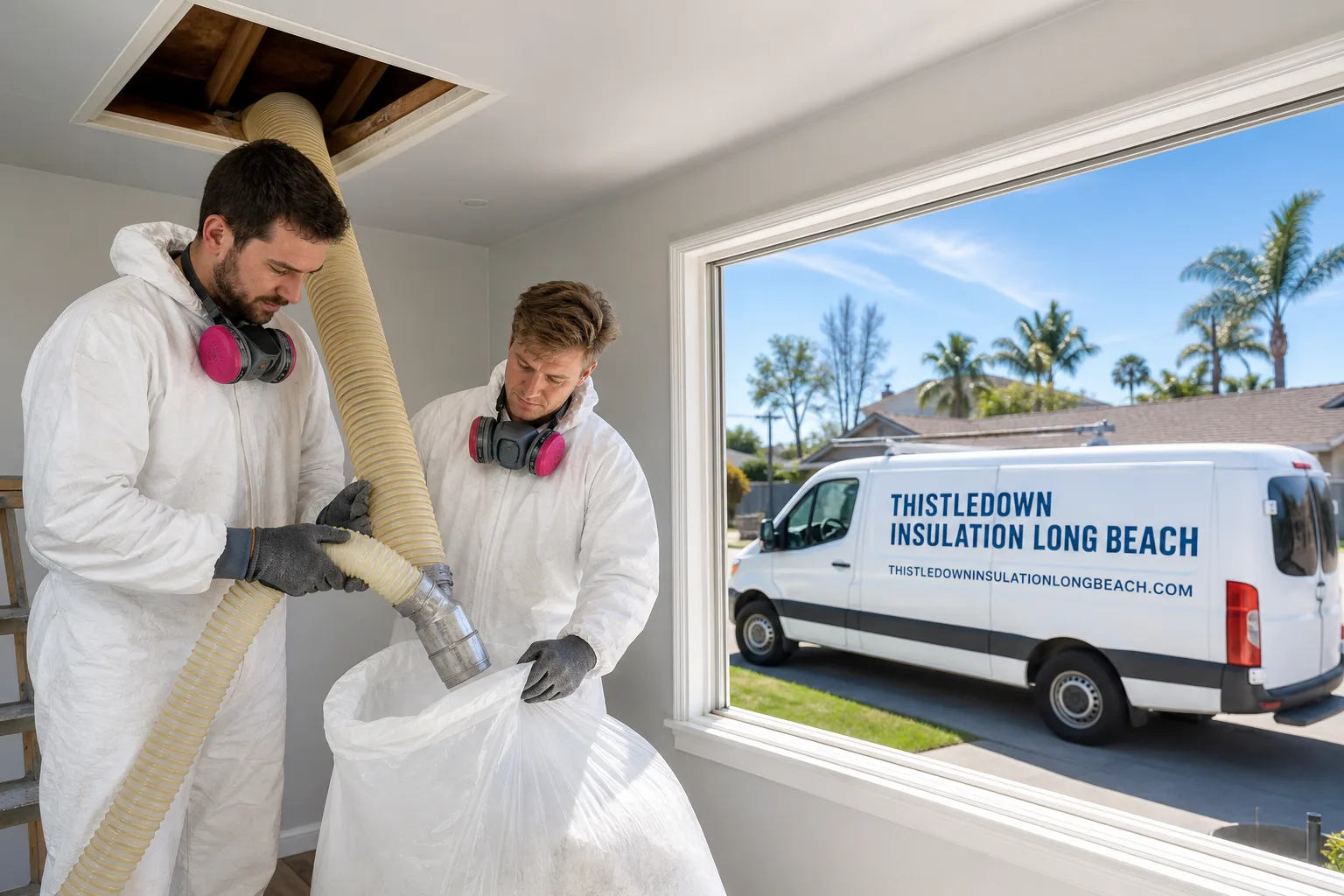
Fast, Reliable Attic Insulation Across Long Beach
Most attic insulation projects in Long Beach run between $1,800 and $4,200 for a typical 1,200-square-foot single-story home, with blown-in cellulose or fiberglass landing on the lower end and full air sealing plus radiant barrier pushing toward the upper range. We’ll give you your exact written price before any work starts, and crews are usually in your Long Beach attic within 3 to 5 business days. Call (562) 471-3972 and a live person answers, 24 hours a day.
Long Beach isn’t one climate. It’s two. Drive west of Cherry Avenue on a July afternoon and you’ll feel the marine layer sitting on the neighborhood like a damp blanket. Drive east toward the 405 and the sun hits harder, the air thins out, and attics bake. That divide changes everything about how we ventilate, air seal, and insulate your attic. We know which side of the city you’re on before we ever climb the ladder, and we plan the job accordingly. This isn’t generic attic work. It’s Long Beach specific.
Why Thistledown Insulation Long Beach Is Long Beach’s Preferred Attic Insulation Company
We’re a Cedarwell-family company, founded in 2003 and held to the Cedarwell Care Promise on every single visit. That means shoe covers go on at the front door, drop cloths run the full hallway to the attic hatch, and you get a photo of the clean-up before the van pulls away. Neil Barron leads our crew, and he’s built the team around a simple idea: explain before you act, and leave the house the way you found it. Better, actually.
Long Beach homeowners call us because we know what’s behind their walls. The 1920s Spanish Revival homes in Bluff Heights. The 1930s stucco bungalows in California Heights. The post-war one-story homes in Los Altos where the attic hatch is barely wide enough for a grown adult. Our technicians are background-checked and uniformed, so you know exactly who’s walking through your door while the kids are doing homework and the dog is watching from the couch.
Every job gets the 365-Day Done Right Promise. If something isn’t right, we make it right. No debate, no fine print, no chasing anyone down. And you’ll have your written price before we touch a rafter. Always.
Attic Ventilation in Long Beach
Attic ventilation in Long Beach is the difference between an attic that breathes through the marine layer cycle and one that slowly rots from the inside. West of Cherry Avenue especially, nightly condensation on the underside of unvented roof sheathing is the quiet killer we deal with more than anything else. The fix usually means installing soffit-to-ridge baffles, confirming the venting path is actually open, and sealing the bypasses that let humid indoor air drift up through old lath-and-plaster ceilings. Long Beach homes built in the 1940s often have new roofs with zero added vents, and that’s precisely when the attic turns into a sauna by 2 p.m. and a condensation chamber by 10 p.m.
What We Check Before Adding Insulation
We walk the attic with a moisture meter and a thermal camera before we ever open an insulation bag. In a 1938 stucco bungalow in California Heights, our crew found R-19 fiberglass batts stuffed directly against the roof deck. The nightly marine layer had been condensing on that sheathing for years, and the 2×4 rafters were soft enough to sink a screwdriver into. We pulled the wet batts, installed baffles from soffit to ridge, sealed the bypasses around the old knob-and-tube chases with closed-cell foam, rebuilt the rotten rafter tails, and then laid fresh R-30 Rockwool with a full radiant barrier. That’s not dramatic. That’s a Tuesday in Long Beach.
When Ventilation Has to Come First
If you live in a 1920s-1950s home with original roof framing and no soffit vents, adding more insulation without adding air movement is the single most damaging thing you can do to that house. We see it in Bixby Knolls, in Wrigley, in the old neighborhoods around Recreation Park. The insulation traps moisture against the sheathing, and within one summer you’ve got mold blooming across the underside of your roof deck. Ventilation prep runs about $400 to $900 for a typical single-story attic, depending on how many baffles and vent openings the roof needs. That number is in your written quote before we start.
Radiant Barrier in Long Beach
A radiant barrier in Long Beach isn’t about keeping heat in. It’s about stopping the 3 p.m. heat soak from cooking your attic and everything below it. Long Beach homes east of Cherry Avenue, closer to the 405 floor, get real sun load in summer. A radiant barrier stapled to the underside of the roof rafters reflects radiant heat back out before it ever gets absorbed into the attic air. That keeps your attic 15 to 25 degrees cooler on a hot afternoon, which means your air conditioner isn’t fighting a superheated box right above the kids’ bedrooms.
Radiant Barrier With Existing Insulation
You don’t have to remove what’s already up there. If your existing attic insulation is dry and in good shape, we can install a radiant barrier over it without disturbing the fiberglass or cellulose. The barrier goes on the rafter line, not the attic floor, so your existing R-value keeps doing its job and the barrier blocks a new problem before it starts. Typical cost for radiant barrier in a Long Beach single-story attic runs $1,400 to $2,800, depending on roof geometry and access.
Pairing Radiant Barrier With Ventilation Work
The smart order is ventilation first, radiant barrier second. A radiant barrier works by reflecting heat, not absorbing it, so you need air moving through the attic to carry that reflected heat away. If your attic is sealed up tight with no soffit vents, the barrier turns the attic into an oven and makes condensation worse at night. In west Long Beach especially, where the marine layer returns every evening, we always make sure the venting path is open before we staple anything to the rafters.
Trusted Brands We Service in Long Beach
We don’t push one brand on every Long Beach home because different attics need different products. For older bungalows with tight rafter bays, we lean on Rockwool batts for their moisture tolerance and fire resistance. For open attics with deep joist channels, GreenFiber blown-in cellulose fills the voids and slows air movement through the old framing. For spray foam on the roofline, Demilec’s closed-cell formulas do the job in homes where the marine layer is a constant. We keep local stock at the ready for Long Beach jobs, so we’re not waiting on a warehouse in Riverside when your attic is open and ready.
Common Attic Insulation Problems We See in Long Beach Homes
- Marine layer condensation on unvented 1940s roof decks. Humid ocean air rises through old lath-and-plaster ceilings every night and condenses on the cold underside of the sheathing. Within one summer, that’s mold. Within a few years, it’s rot.
- Over-insulated westside bungalows with no soffit vents. Well-meaning contractors blow R-38 into an attic that can’t breathe. The fiberglass becomes a wet sponge by October, sags, and loses its R-value completely.
- Hidden void spaces in partially retrofitted 1920s attics. New decking gets laid over old roof sheathing, trapping moisture in the cavity between them. The old cut nails holding the original rafters together corrode, and the homeowner has no idea until a rafter sags.
- Knob-and-tube wiring buried under blown-in insulation. That old wiring gets hot in enclosed spaces, and covering it with cellulose can create a fire hazard. We inspect every attic for active knob-and-tube before we add any material, and we seal the chases properly when we find it.
Pricing for Attic Insulation in Long Beach, CA
We Also Serve Cities Near Long Beach
Our crews cover Seal Beach, Los Alamitos, Cypress, and Cerritos in addition to Long Beach, and we’re familiar with the housing quirks in each. Seal Beach’s older beach cottages have their own ventilation needs, Los Alamitos and Cypress run a bit warmer inland, and Cerritos homes share a lot of DNA with the 1960s and 70s stock you see across Long Beach. For full details on our Attic Insulation services, that page covers the range of what we do. Dispatch and scheduling are coordinated from our Los Angeles office; crews serve Long Beach locally.
Serving Long Beach, CA - Our Local Coverage Area
We’re based in the Long Beach area and know this community well. Use the map below to see our service coverage - if you’re nearby, we can almost certainly help.
FAQs About Attic Insulation in Long Beach
Does a home west of Cherry Avenue really need less attic insulation than one near the 405?
No. West of Cherry, the marine layer keeps afternoons 10 to 15 degrees cooler than near the 405, but the real issue is moisture, not heat. You still need R-30 to R-38 in your attic, but you need it paired with proper ventilation and air sealing. Adding less insulation to a westside bungalow because it “feels cool” is a mistake that leads to condensation, mold, and rotted sheathing. Call (562) 471-3972 and we’ll tell you exactly what your attic needs, westside or eastside.
How do you insulate a 1940s stucco bungalow attic that has no soffit vents and a new roof?
First, we add ventilation. A new roof without added soffit or ridge vents means the attic is sealed tighter than it was in 1945, and that turns the space into a daily sweat lodge. We install baffles from soffit to ridge, cut vent openings where the roof design allows, then air seal the attic floor and add the insulation your home actually needs. Ventilation is the first step, not the last one.
Is a radiant barrier worth it in Long Beach if I already have attic insulation?
Yes, especially if your home sits east of Cherry Avenue where the afternoon sun loads up on the roof. A radiant barrier reflects heat before it reaches your existing insulation, which keeps the attic cooler and your air conditioner from running overtime. The barrier works with what’s already up there, not instead of it. We install barriers over existing insulation all the time in neighborhoods like El Dorado Park and Plaza.
What should I look for in a 1930s attic with knob-and-tube wiring before adding insulation?
You should look for a professional who knows that knob-and-tube wiring cannot be buried under insulation. The old wiring needs to be decommissioned, rewired, or carefully protected before any material goes over it. Our crews inspect every attic for active knob-and-tube before we add anything, and we seal the chase points properly when we find it. If you have a 1930s home in Long Beach with original wiring, call us before you let anyone blow insulation into that attic.
How do you prevent mold when insulating an attic in a house that gets heavy marine layer every night?
You control the moisture path. That means sealing every bypass that lets humid indoor air up from the living space, opening the soffit-to-ridge ventilation path so the attic can dry out during the day, and using insulation products that don’t absorb and hold water. West Long Beach homes near the water in Belmont Shore and Naples need this more than anywhere else in the city. Get the ventilation right first, and the insulation you add will stay dry for decades.
Call Thistledown Insulation Long Beach for a Free Attic Assessment
If your Long Beach attic hasn’t been looked at in years, start with a conversation. Call (562) 471-3972 and tell us what you’re noticing: hot spots in the afternoon, damp air upstairs, higher cooling bills, or just a house that never feels quite right. We’ll schedule a time to walk your attic, explain what we see, and hand you a written price before anything gets moved. Shoe covers on, drop cloths down, pet-safe products where a choice exists, and quiet tools when the kids are napping. That’s how we work in every Long Beach home we enter.
Written by Neil Barron, Owner at Thistledown Insulation Long Beach, serving Long Beach as part of the Cedarwell family since 2003.